BlueGlassCollective.com - Visionary Campus

the vision and the dream...

The vision of The Blue Glass Collective and the projects it spawns is, as the cultural historian Thomas Berry wrote, “The Great Work,” that of saving the world. We believe that through the gathering of some of the finest minds of today and going through a simple community building process we will be able to combine the intelligences of heretofore disparate fields allowing for a new, fuller and deeper experiential model of our existence.

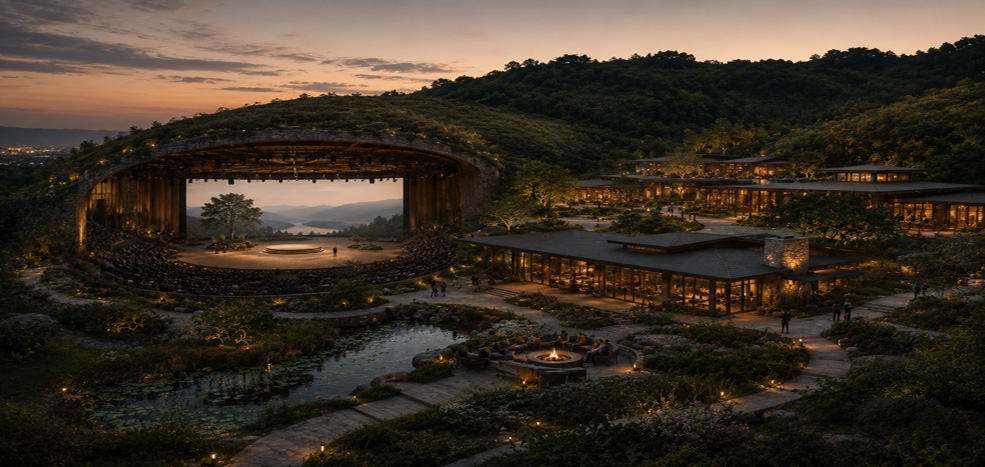
By also creating a safe and caring environment and culture we will provide space and support for deep explorations and collaborations that will manifest as public art works serving as conduits for transformative archetypal energies. Our basic vision is to focus initially on live productions because of their potential for cultural impact in terms of the opening of healing and creative powers. Much of what we discover in our initial works will be utilized in subsequent works. The Collective will be the interdisciplinary art think tank surrounded by a large art community offering workspace and accommodations for up to 100 guests.

“The essential dynamic of community development is the emptying of ourselves.”
– M. Scott Peck
imagine

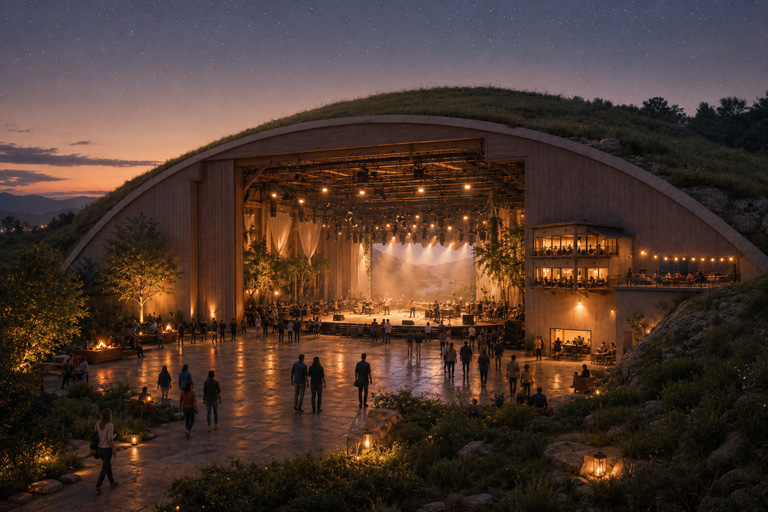
Imagine a warm, natural Zen environment with organic cuisine, comfortable private quarters and an enormous and well-equipped sound stage. Consider a beautiful and inspiring rural setting approximate to a city so that people can drive out for an evening lecture, show or performance. Imagine a place where people will come from all over the world for extended visits and to have the opportunity to perhaps work with one or more of their cultural heroes. Imagine a place where one week there is a lecture and film presentation by an “A List” director and the next is a workshop offered by a major spiritual teacher followed by a performance by an important musician or band.

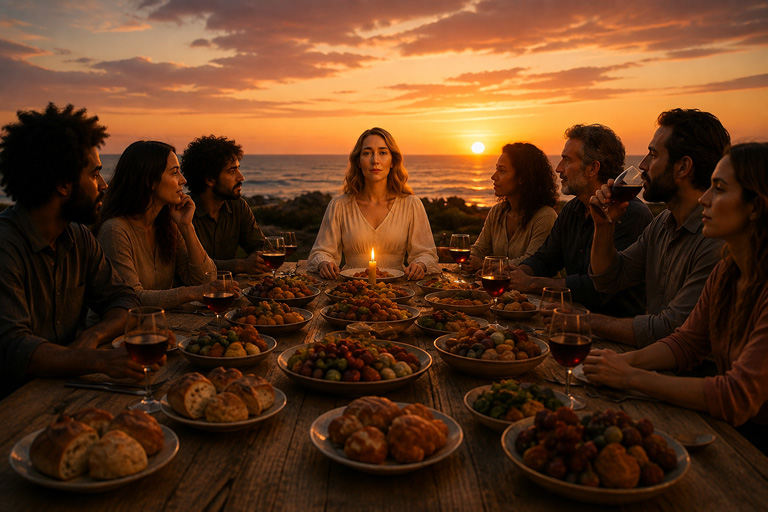
Community in its fullness is “a mystical body.” In using the word “community” in this context, we are talking about a specific entity. M. Scott Peck dedicated his career to furthering the efforts and discoveries of Bill Wilson, founder of AA and developer of the Twelve Traditions which are a template for community building and maintenance. In two and one-half days, a group of polite former strangers will find themselves joined in an atmosphere of intimacy, reverence, silence and awe, for these are attributes of authentic community.

By sparing no expense in building these ideas, the breadth and depth of the return will be incalculable. We seek to directly alter the thought life of our world to the extent necessary to redirect our current course. The shows will tour many of the largest cities around the globe and will be supplemented with online information, workshops, films, artworks and educational programming. The objective is to have stationary installations employing many of the same principles in major museums and galleries throughout the world.

  • BlueGlassCollective.com - Visionary Performance Space
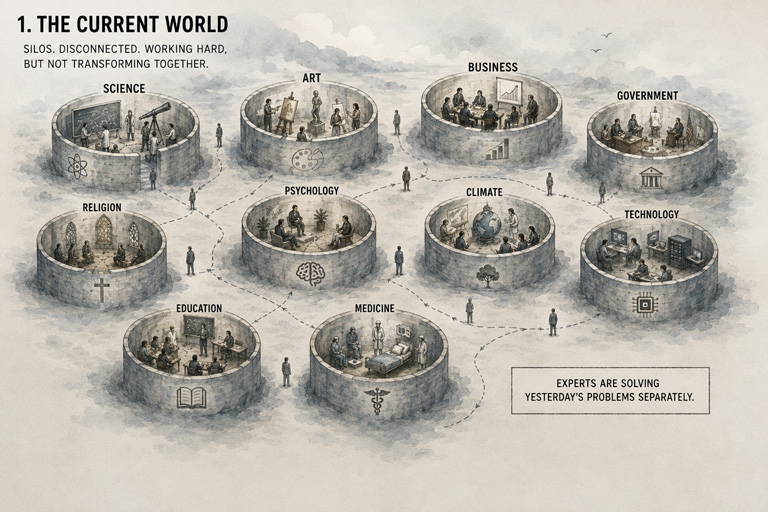
  • BlueGlassCollective.com - The Current World
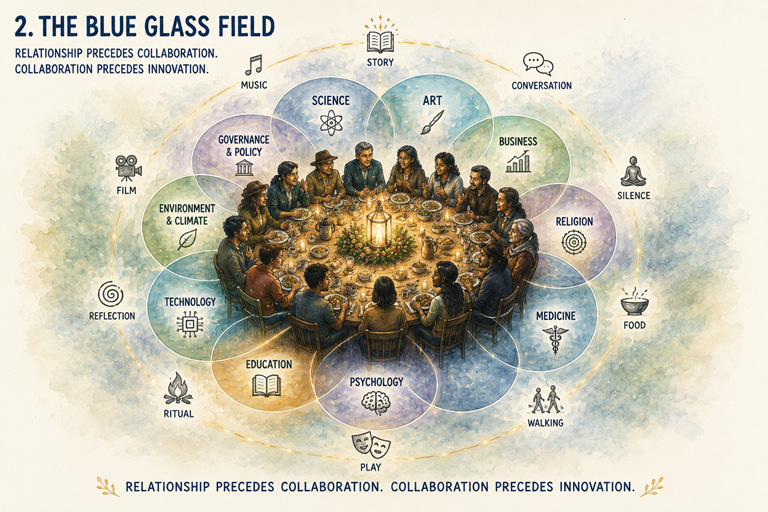
  • BlueGlassCollective.com - The Blue Glass Field
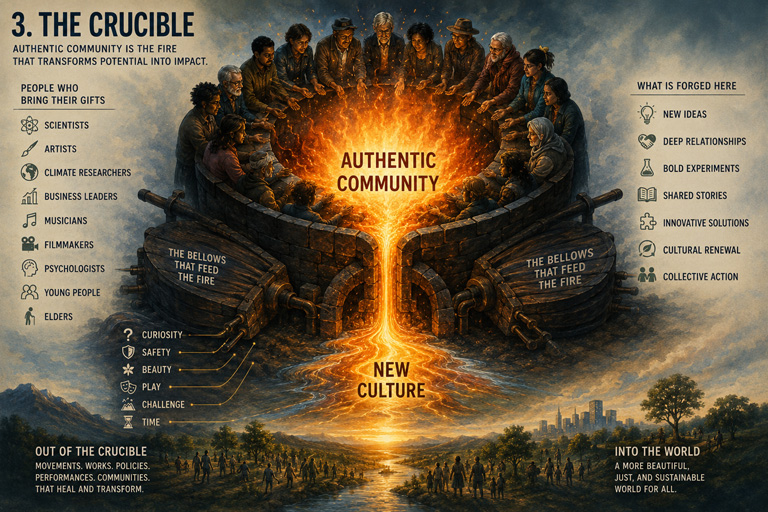
  • BlueGlassCollective.com - The Crucible
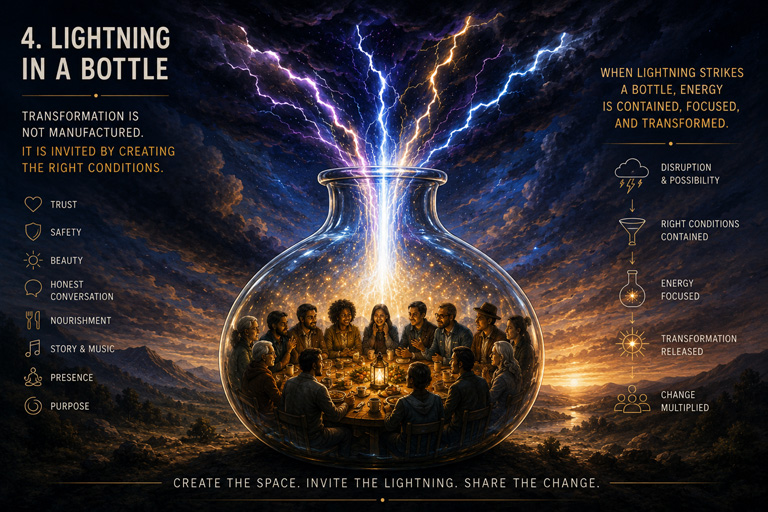
  • BlueGlassCollective.com - Lightning In a Bottle
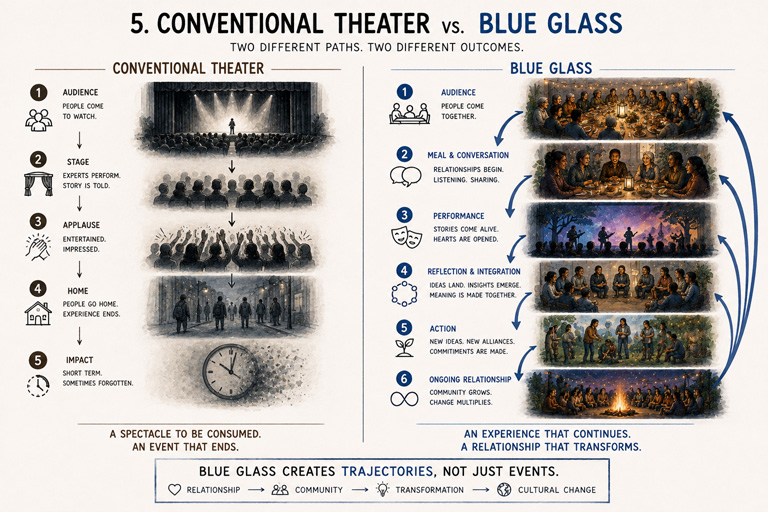
  • BlueGlassCollective.com - Conventional Theater versus Blue Glass
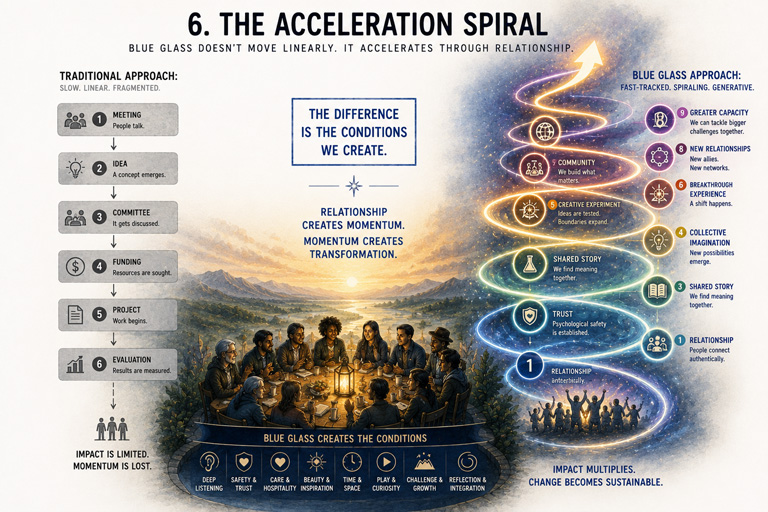
  • BlueGlassCollective.com - The Acceleration Spiral
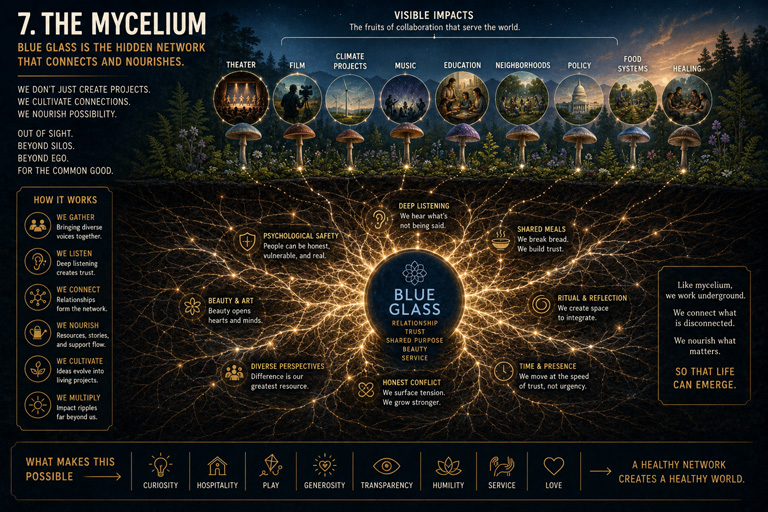
  • BlueGlassCollective.com - The Mycelium
  • BlueGlassCollective.com - The Ripple Effects
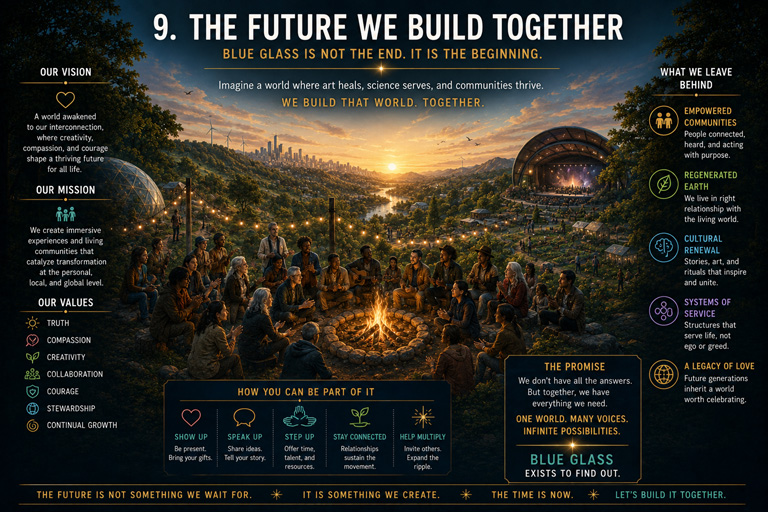
  • BlueGlassCollective.com - The Future We Build Together
rule

creative performance

Performance

the bridge from individual to collective

What happens when archetypal patterns are not only accessed individually, but begin to organize a group? What if the “field” is not simply inside the psyche, but arises between people as they come into alignment? This is where the work begins to diverge from its sources.

A useful bridge into this territory comes from the theatre work of Jerzy Grotowski. Grotowski rejected the idea of performance as representation. For him, theatre was not about showing something to an audience, but about creating a situation in which something real could occur. He stripped away everything nonessential—sets, effects, ornamentation—until only the encounter remained: one human being in the presence of another, with nothing to hide behind.

In this stripped-down environment, performance ceased to be an act and became an event. The actor was no longer playing a role, but undergoing a process. The audience was no longer observing from a distance, but witnessing something immediate and unmediated. What emerged, at its best, was a shared field of heightened attention—a moment in which something true appeared.

The essential insight here is simple: reality does not need to be created. It is revealed when what is false is removed.
This principle carries directly into the work of Blue Glass. The aim is not to produce coherence through effort or technique, but to create the conditions in which incoherence falls away. When self- presentation relaxes, when attention deepens, when the group is not rushed toward outcome, a different quality of experience becomes possible.

In this sense, the group becomes an instrument. Each person brings their own history, perception, and capacity for attention. But as these begin to align—not through conformity, but through attunement—a shared pattern emerges. This pattern is not imposed from above, nor constructed through agreement. It arises through relationship.

One might think of it less as orbit and more as resonance. Not separate bodies moving around a fixed center, but a system of elements adjusting to one another until a stable pattern forms. In music, this would be harmony. In physics, coherence. In lived experience, it is the moment when separate lives begin to move in the same pattern.

Such moments are often brief. They cannot be held indefinitely. But they leave a trace.

rule

visionary space

transformation in space

What has been less explored is what happens when this movement is no longer confined to the individual. The work of Blue Glass begins at precisely this point of extension. It asks a different question: what becomes possible when a group of people comes into alignment—not as a collection of individuals having parallel experiences, but as a coherent field?

This is not metaphor. It is something that can be perceived directly when conditions are right. Attention stabilizes. The noise of self-presentation begins to fall away. People become more aware not only of themselves, but of the space between them. At a certain threshold, something shifts. The group is no longer simply a gathering of individuals. It begins to function as a single, responsive system.

This shift is subtle, but unmistakable. It cannot be forced, and it cannot be simulated. It emerges when certain conditions are present, and dissolves when they are not. To understand how such a field forms, it is helpful to look at several traditions that, while distinct, converge on similar principles.

In Sufi teaching, there is the concept of adab—often translated as right conduct, but more accurately understood as right relationship. Adab is not a set of rules imposed from the outside. It is an attunement to what is required in each moment: when to speak, when to remain silent, when to step forward, and when to recede. It is the refinement of perception to the point where behavior becomes aligned with the deeper structure of the situation. In a group setting, adab creates the conditions under which presence can be sustained and shared.

Alongside this is the understanding of subtle forces within the human field. In the language of the Divine Names, one might speak of qualities such as mercy, patience, truth, and correction. These are not abstract ideas, but lived dynamics. A space without mercy becomes brittle. A space without patience becomes rushed. A space without truth becomes vague. A space without correction allows distortion to persist. When these forces are held in balance, something stable and trustworthy can emerge.

Visionary Space
rule

sustaining support

Supporters

toward the public good

Over the past several years, a nationwide group of artists and thinkers have been working through a public benefit corporation called Blue Glass Farm PBC—a cultural initiative bringing artists, scientists who question materialist assumptions, and spiritual leaders into shared creative and dialogic spaces. The work has emerged quietly, without branding pressure or ideology, in response to a pattern we keep encountering everywhere: deep cultural exhaustion.

People are tired of politics that no longer speak to lived experience, tired of explanations that reduce meaning, and tired of spiritual language that feels either commercialized or coercive. What we’re seeing instead is a hunger for something simpler and rarer: spaces where people can listen to one another without needing to persuade or perform.

Out of this there has come a modest but resonant project called Fugue State—a dialogue-driven cultural work centered on a small group of people traveling together, not to escape the world, but to listen more carefully within it. It is not advocacy, and it is not a solution. It is an experiment in presence, conversation, and shared attention at a time when those capacities feel endangered.

Blue Glass exists as a Public Benefit Corporation precisely so that cultural work like this can remain oriented toward public good rather than speed or scale. We are interested in long-term impact, slow resonance, and forms of creativity that quietly reweave social fabric rather than tearing it further.

"The destiny of humans cannot be separated from the destiny of earth."
– Thomas Berry